CLW GROUP JOURNAL
Choosing a Fuel Tanker Configuration: Capacity, Chassis and Compartments
A buyer-facing method for specifying a fuel tanker: how legal payload and product density set real capacity, how chassis choice follows the route, and when compartments, aluminium and bottom loading pay off.
Capacity starts with weight, not litres
The most common specification mistake is buying tank volume the chassis cannot legally carry. Real capacity is the gross vehicle weight minus the curb weight, divided by the density of the product. Diesel at roughly 0.82-0.85 kg per litre and petrol at roughly 0.72-0.75 kg per litre mean the same truck carries fewer litres of diesel than petrol, and the tank should include expansion space on top. Work through this arithmetic with the supplier before comparing quotes: on a 32,000 kg GVW chassis with an 11,585 kg curb weight, about 20,400 kg of payload supports roughly 24,000 litres of diesel, which is why the 25,500-litre Tianlong aluminium tanker lists its capabilities in exactly these terms.
Match the chassis to the route
- 4x2 light tankers suit station replenishment and site refuelling on urban rounds, where a short wheelbase reaches forecourts that bigger trucks cannot.
- 8x4 rigid tankers carry the volumes trunk distribution needs, and the extra axles keep axle loads legal when full.
- Semi-trailer combinations move the largest volumes on depot-to-depot runs where turning circles are generous.
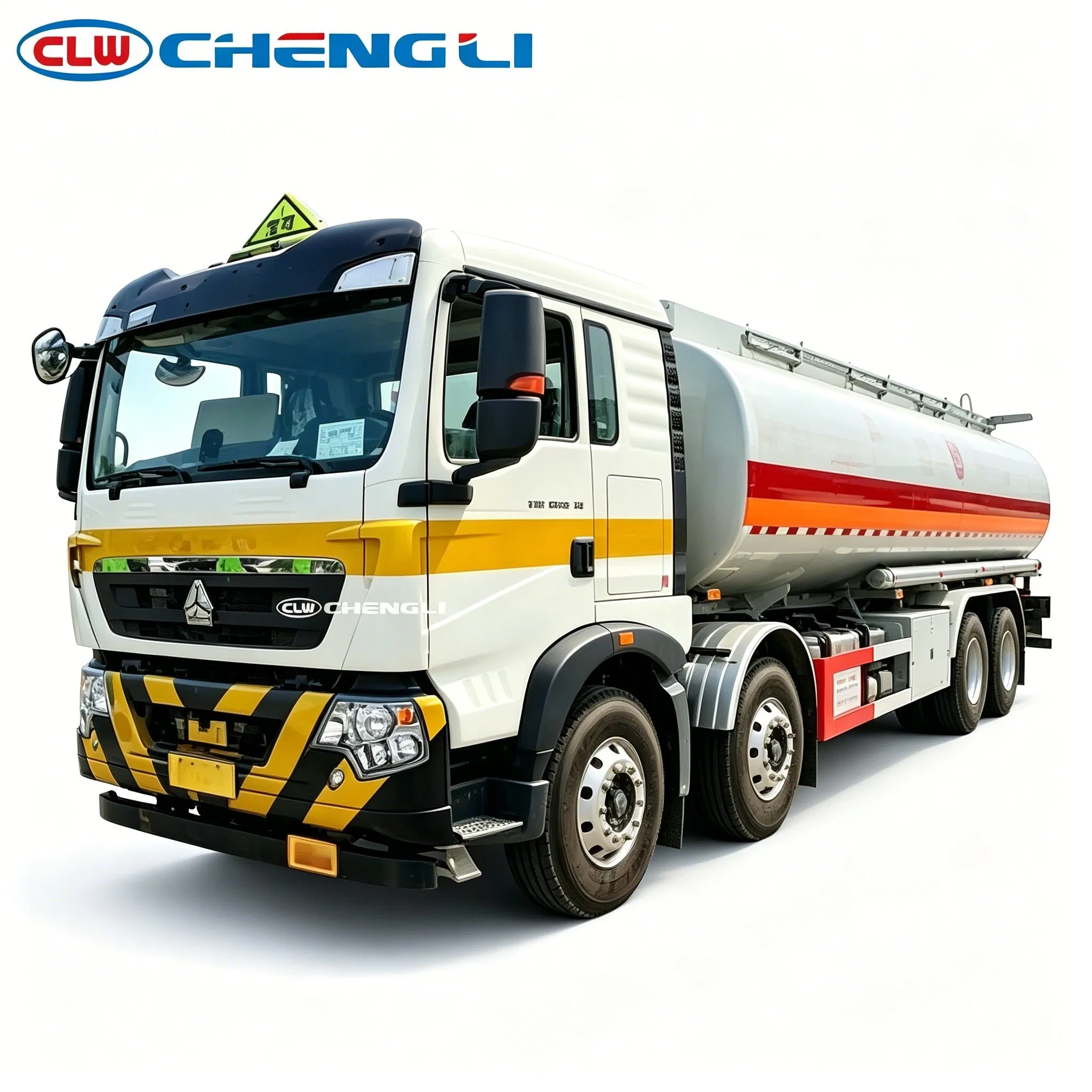
Engine power should follow the loaded route: a fully laden 8x4 on rolling terrain is a different requirement from a light 4x2 on city streets. The 9,900-litre Dongfeng 4x2 and the 30,000-litre HOWO 8x4 in our range show how the two ends of this spectrum are specified.
Carbon steel or aluminium
Carbon steel (Q235) is the economical default and is easy to repair in most workshops. Aluminium alloy such as 5182 saves tare weight, which converts directly into legal payload on a weight-limited chassis, and resists corrosion from moisture in fuel. Alloy builds cost more up front and need weld-qualified repair, so the choice usually follows how the fleet values payload and corrosion resistance against first cost.
Compartments and metering
A single compartment carries one product per trip, which is simple and easy to clean. Multi-compartment tanks carry diesel and petrol together, matched to station drops that need both, at the cost of more valves, meters and cleaning discipline. If you sell by volume at the delivery point, specify the pump and metering package with the tank rather than adding it later.
Bottom loading and safety kit
Terminals increasingly expect bottom loading with vapour recovery, anti-overflow probes and earthing reels, and a bottom-loading build also keeps the operator off the tank top during loading. Electronic braking (EBS) with stability control, tyre-pressure monitoring and speed limiters are available on premium chassis and are worth specifying for trunk-route fleets, as covered in our Nigeria import walk-through.
Specify, then quote
Write the specification as: products carried, litres required per trip at legal weight, route type, compartment count, loading method and safety equipment. A factory quoting against that list returns comparable offers. CLW GROUP builds configurations per order and confirms engine, emission standard and compartments per destination market; start with the enquiry form.