CLW GROUP JOURNAL
NMDPRA 45,000 Litre Fuel Tanker Limit: What Nigerian Operators Need to Know
Nigeria has moved to cap how much fuel a road tanker may load. This guide explains what changed, who the 45,000 litre limit affects, what it means for larger tankers already in service, and how to specify a compliant replacement.
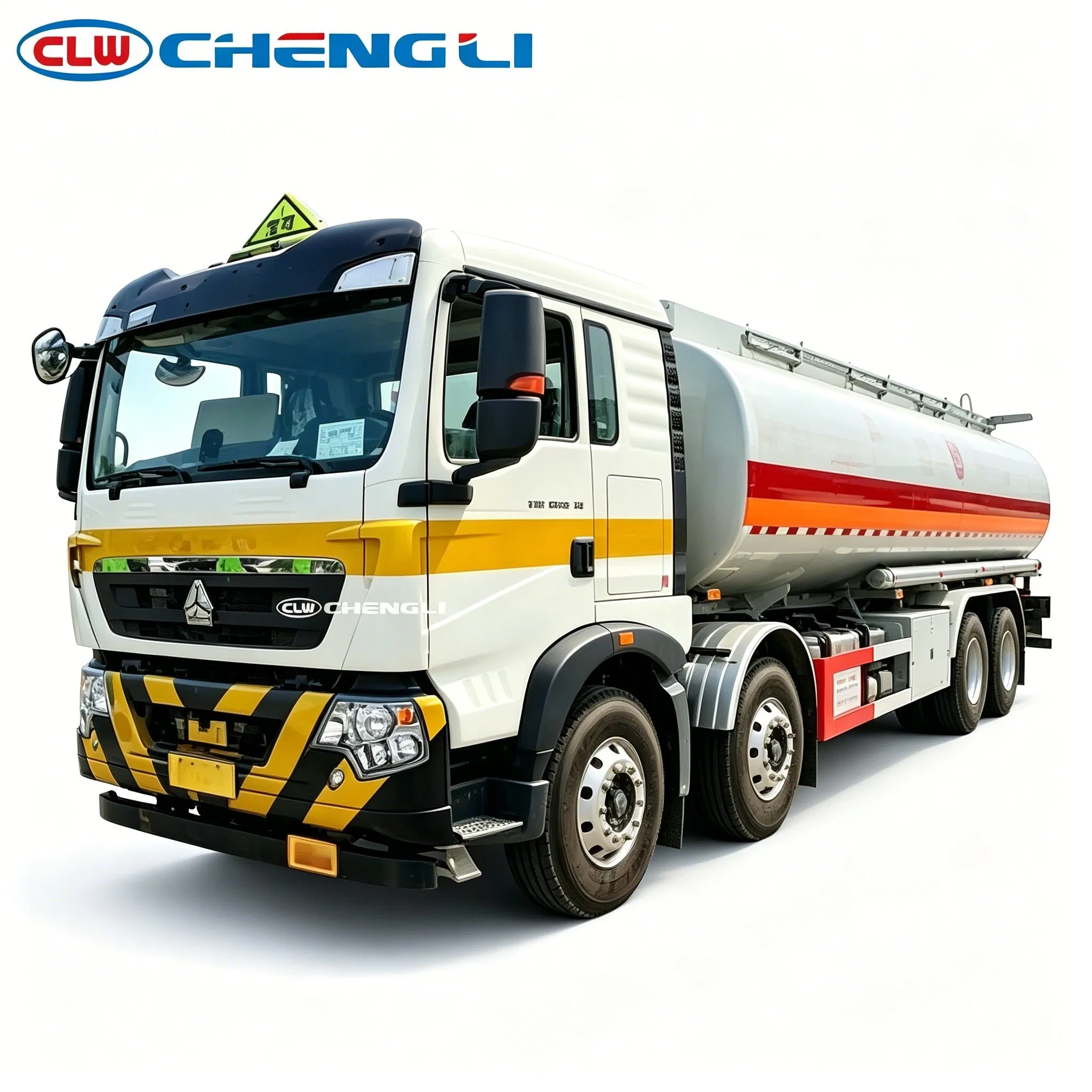
What changed and why it matters
Road fuel haulage in Nigeria is regulated by the Nigerian Midstream and Downstream Petroleum Regulatory Authority (NMDPRA). Following recurring tanker fires and bridge and road damage linked to overloaded fuel tankers, the regulator has moved to cap how much product a road tanker may load: the largest configurations first came under restriction, and loading has progressively tightened toward a 45,000 litre ceiling for road fuel transport. Enforcement attention has focused on loading racks, including those serving the Dangote refinery corridor.
The exact thresholds, dates and enforcement mechanics change with circulars. Treat this page as an operator orientation, and confirm the current rule with NMDPRA communications, your loading terminal or your clearing agent before committing to a vehicle specification.
Who the limit affects
- Transporters loading at regulated racks — terminals increasingly refuse to load tankers whose certified capacity exceeds the cap, regardless of how much the driver actually intends to carry.
- Fleet renewals — buyers importing new tankers should match the new ceiling now, because a vehicle that cannot load legally is stranded capital.
- Independent hauliers competing with integrated operator fleets that have already re-specified around compliant volumes.
Volume limit or loading limit?
The distinction that matters when ordering a tanker: whether the rule constrains the tank's certified capacity or the actual quantity loaded per trip. If terminals enforce on certified capacity, an oversized tank cannot simply be part-filled; if enforcement works on declared load, larger tanks may still operate under-loaded at some racks. Reports differ and practice is still settling, which is why we advise confirming with the terminals you actually load at before choosing tank size. When in doubt, a tank rated at or below the ceiling is the safe specification.
What happens to 60,000 litre tankers already in service
Owners of larger tankers report a narrowing set of options: re-rating or re-plating where a certifier allows it, conversion work where the tank structure and chassis permit, selling into markets without the cap, or retiring the unit. None of these are quick or cheap, which is exactly why the specification you buy today matters. If you are replacing a 60,000 litre unit, the working question is not "what is the biggest tank I can buy" but "what configuration moves the most litres per week inside the rules".
How to specify a compliant replacement
1. Right-size around the ceiling
For rigid trucks, the practical compliant band runs from about 10,000 to 30,000 litres depending on chassis rating; for semi-trailer combinations the band extends up to the ceiling itself. Within the limit, volume per trip is fixed, so weekly throughput comes from reliability and loading speed, not from extra tank size. Our configuration guide walks through the capacity-versus-payload arithmetic.
2. Let compartments do the work oversized tanks used to do
Multi-compartment builds let one compliant trip carry PMS and AGO together for station drops, recovering the flexibility operators used to get from sheer volume. Compartment counts, discharge manifolds and meters should be decided with your delivery pattern, not defaulted.
3. Buy speed and safety, not volume
With volume capped, the differentiators become bottom loading for faster rack cycles, vapour recovery where terminals require it, anti-overflow protection and electronic braking. These are standard on premium builds such as the Dongfeng Tianlong 25,500-litre aluminium tanker, whose alloy construction also saves tare weight within the same legal envelope.
4. Check the paper trail
Compliant importing also means the documents agree: the tank inspection report, capacity figures on the invoice and the conformity certificates under the SONCAP route should all describe the same vehicle. Our import walk-through covers the full document pack.
Frequently asked questions
Is a 50,000 or 60,000 litre tanker still legal to buy?
We do not recommend specifying one for Nigerian fuel service under the current direction of the rules, and we do not offer them for this market. Our Nigeria-range rigid tankers run from 9,900 to 30,000 litres, including the HOWO 30,000-litre 8x4 and the Dongfeng 9,900-litre 4x2.
Does the limit apply to the tank or the load?
Enforcement practice has varied between certified capacity and declared loading; confirm with your loading terminal. A tank rated at or below the ceiling is safe under both readings.
What about diesel versus petrol?
The loading cap applies to regulated road fuel transport regardless of product. Denser products also hit axle-weight limits before hitting tank volume, which is why capacity and payload should be checked together, as our capacity guide shows.
Where can I confirm the current rule?
Through NMDPRA official communications, your loading terminal's rack rules, or a licensed clearing or compliance agent. We track the direction of the rules and build to the conservative reading.
What we supply within the limit
CLW GROUP quotes Nigeria-bound fuel tankers specified around the compliant envelope, with bottom loading, safety electronics and compartment layouts confirmed per order. Send your products, volumes and loading terminals through the enquiry form and we will return a specification that fits the rules as they stand.